How to Analyze Fish Ranges: Limp, Limp-Raise, and Limp-Fold

When we face a recreational player at the table, thinking “he plays badly, so I should win” would be a mistake. It’s still important to evaluate his play through the lens of “range vs range.” However, understanding his range is not always easy. Most recreational players prefer a strategy with a high limp frequency and a small raise frequency, others use large preflop raises with very few limps, and the smallest group has roughly balanced limp and raise frequencies preflop.
In this article, we’ll show how understanding recreational players’ preflop patterns helps you play hands correctly against them and consistently win pots.
Playing against a “VIP” fish
The hand analysis was done using H2N version 4.1.226 and PBCP HUD.
How can we understand the distribution of a recreational player’s entire range across different lines in order to build our strategy for the hand?
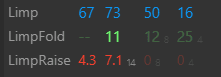
For this, I use the limp, limp-fold, and limp-raise stats. In my HUD they are displayed as Total, and in the popup they are broken down by position.
Let’s look at a specific example. In this hand, the opponent has stats of VPIP 79% and PFR 4%. This is a classic example of a “VIP” fish who enters far too many pots but rarely shows aggression before the flop. Playing against such opponents has strong positive expected value because their ranges are far too wide and vulnerable.
Here is the hand itself:
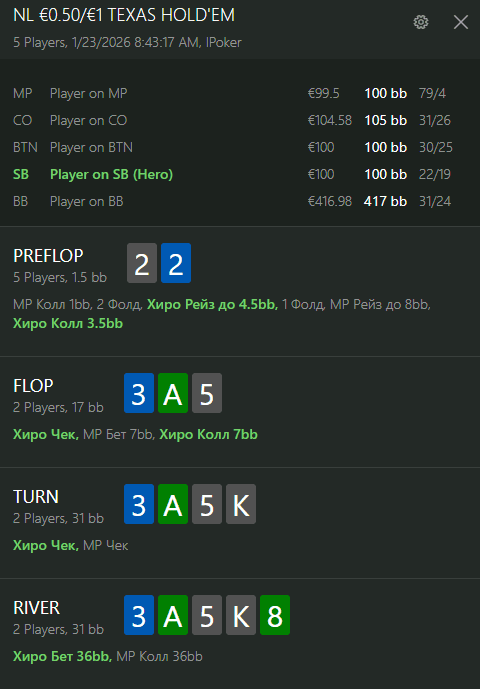
I’m in the SB with a pocket pair — 2 2. I make a standard isolation raise but face a limp-raise. His average limp range can be estimated at around 70%, while his limp-raise is about 5–6%, meaning the overall range here is unlikely to exceed 3–5%. With such a distribution, his range will be heavily weighted toward strong hands with a small number of random ones mixed in.
The raise is 8bb, and with 22 I need to call 3.5bb more to call the min 3-bet, which the pot odds justify.
The flop comes Ax — bad for me, because all AQ–AK hands connect with it. Without additional equity I would simply fold 22. But I have a gutshot. I need 22.5% equity to call. I have 6 live outs, so it’s a call.
The turn is +K.
The opponent checks behind, which gives me a chance on the river.
The river is a blank (8x).
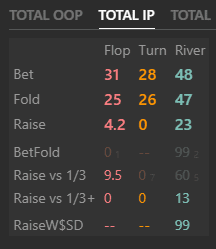
How do I evaluate his range on the river? The opponent has aggression frequencies of 15/17/42, so I must assume he has some slowplays like TP2K, top two pair, or sets such as AA or KK (about 15–17 combos slowplayed), which I will never make fold. On the other hand, there are hands like TT–QQ and KJ–KQ that improved on the turn (let’s say around 25 combos). And a small amount of random hands (5–7 combos).
Here is his play in position:
I decided to try to make him fold two-pair type hands. Against this kind of opponent, you need a large sizing — a pot bet or even an overbet. The showdown looked like this:
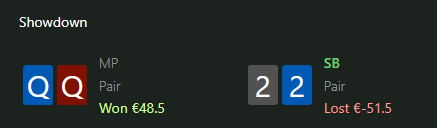
After evaluating his range, it seems I misjudged my fold equity. If I planned to fold out a certain category of hands and failed to do so, then the bluff was bad. However, the opponent’s range itself was understood correctly.
Playing against an average recreational player
This hand was played against a recreational player with stats around 45/6 and a high limp-raise frequency. Here are my opponent’s limp stats:
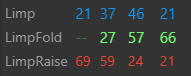
The big difference in limp-raise frequency between EP–MP and CO–BU immediately stands out. This requires appropriate adjustments. Against the first two positions, you need a solid range and must be ready to play against a 14–16% 3-bet range, while against the later positions you can often achieve automatic profit when isolating, which allows you to widen your isolation raising range.
Here is the hand itself:
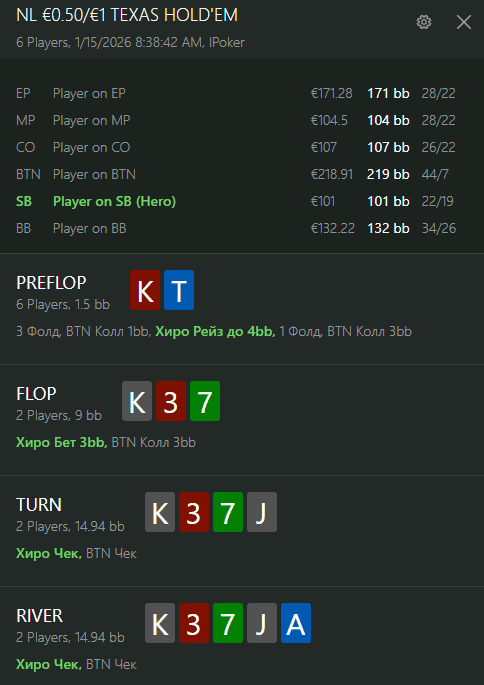
Preflop, this is a great hand to isolate such an opponent. It’s high, blocks some of his raising hands, and has good equity when it connects postflop.
The flop comes Kx — I have top pair with a weak kicker. But to build a strategy for the hand, we need to evaluate his range. He limps 21% of hands, from which he raises about a quarter, folds two-thirds, and calls around 15–20%, which equals roughly 3.5–4%. With this distribution, the calling range should mostly consist of medium-strength hands.
I want to emphasize again: without the limp, limp-raise, and limp-fold stats, I would most likely play this hand in a default way. But the opponent’s stats are not default, which means I need to make adjustments.
My hand is roughly on the border between two or three streets of value.
Here is the information we have about his play in limp-call spots:
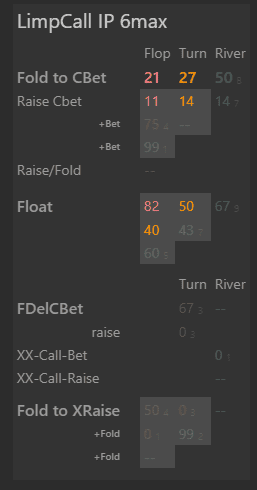
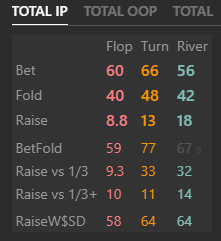
Knowing that this opponent likes to bet and raise frequently postflop when in position, I built my strategy around a small flop bet to widen his calling range, followed by a protected check to give him a chance to bluff.
I relied on the following popup:
Unfortunately, the opponent didn’t bet the turn or river and instead showed this at showdown:
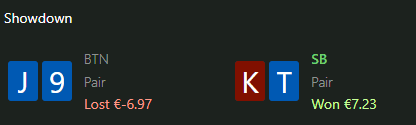
He made second pair on the turn and reasonably decided not to turn his showdown value into a bluff. However, I’d like to point out that he overcalled on the flop — his hand should actually be folding there. This suggests his plan was to push me out of the pot through aggressive actions.
Conclusion
Understanding opponents’ ranges is probably the main thing that separates a professional from a recreational player. And as we just saw in the two examples above, this understanding is simply impossible without quality statistics.
So the next time you sit at the table and see a “fish” across from you, don’t think, “I’ll crush him because he’s bad.” Instead think: “What do I know about his limp-raise? How often does he slowplay? What hands does he call with on the flop?” Open your popup — the one we learned how to create — and take a look. In those dry numbers, the entire story of the hand you’re about to play is already written. All that remains is not to confuse pocket deuces with aces on the river and to press check at the right moment.
Today we looked at how the “limp,” “limp-raise,” and “limp-fold” stats help us build a picture of an opponent’s range. And remember: they must be considered together, and only then should you build your playing strategy based on the specific range you assign.

Latest guides
-

 Hand2Note Popup Editor: Creating a Professional Popup Mar 28, 2026
 -
 Hand2Note Pro Pricing Reduced in 2026 Mar 19, 2026
 -
 How to Analyze Fish Ranges: Limp, Limp-Raise, and Limp-Fold Mar 13, 2026
 -
 Hand2Note Popup Editor: Creating a Simple Popup Mar 10, 2026
 -
 Hand2Note 4.1: Overview of key updates 2025–2026 Mar 10, 2026
We regularly publish new Hand2Note 4 guides on our Discord server.
Join Discord Server